
A mining machine is, in practice, an electric heater that also computes. Almost all the power it draws ends up as heat. The question is whether that heat is wasted or used.
- ~100 TWhof heat produced by bitcoin mining each yearK33 Research, 2022
- 35–50 °Cinlet water on hydro minersBitmain
- 5,676 Wdrawn by one S21 XP Hyd, almost all turned into heatBitmain
- 20 °Cminimum inlet water to start an S21 XP HydBitmain
How much heat are we talking about?
K33 Research estimated in 2022 that bitcoin mining worldwide produces about 100 TWh of heat a year. On a single site the numbers are easier to picture: one hydro machine such as Bitmain's S21 XP Hyd draws 5,676 W, and nearly all of it leaves the machine as heat in the cooling water.
A mining machine is, in practice, an electric heater that also computes.
Why hydro makes heat recoverable
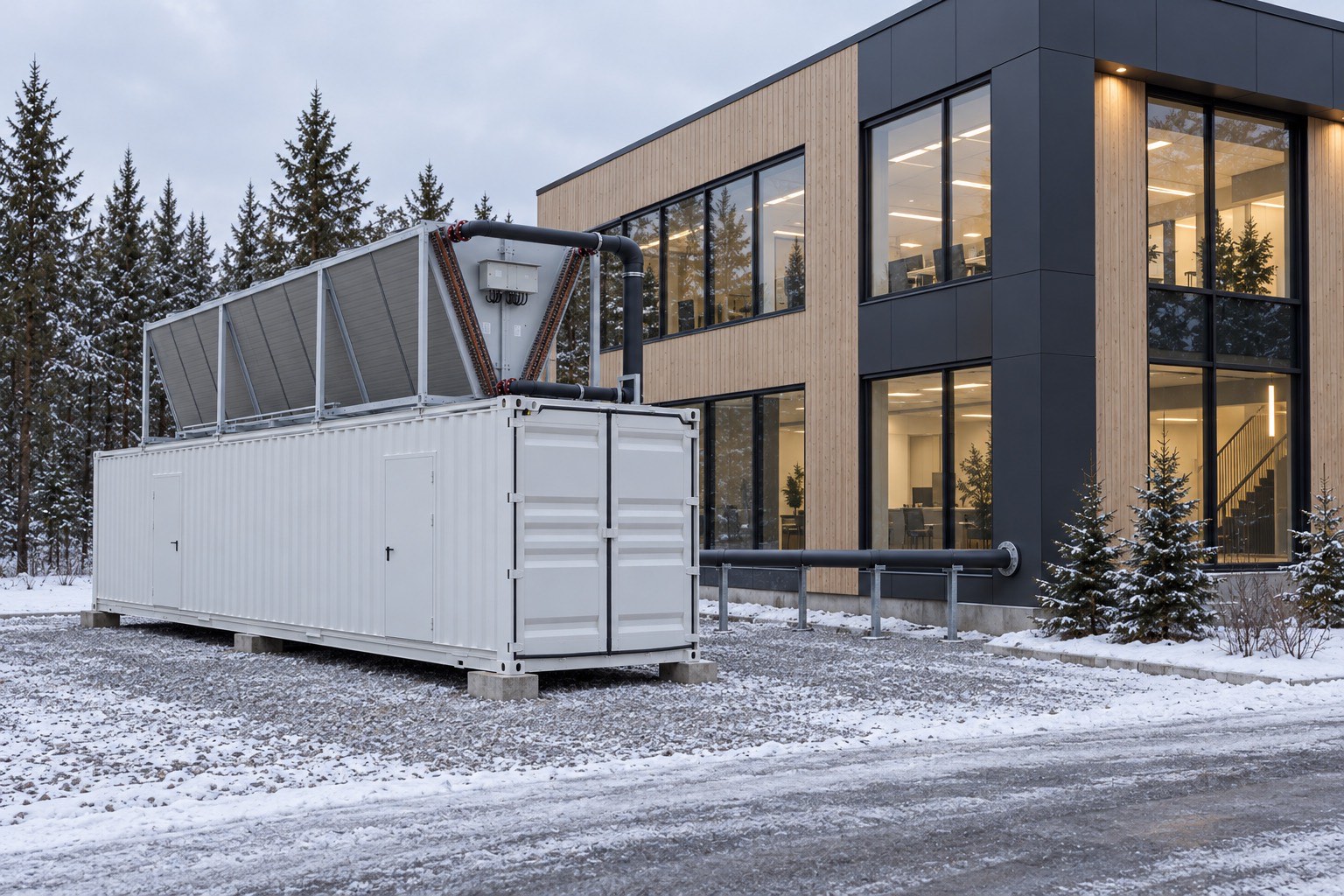
With air-cooled miners, the heat leaves as large volumes of warm air, which is hard to capture and move. With hydro miners, it leaves in a water loop. According to Bitmain's specifications, its hydro models run with inlet water at 35 °C in normal mode and up to 45 or 50 °C in high-energy modes. Water at that temperature can be piped to a building and run through a heating system, then come back cooler to the machines.
Why it fits the Arctic
In the north, buildings need heat for most of the year. At the same time, a hydro site has to keep its water above a minimum temperature: Bitmain's S21 XP Hyd won't start below 20 °C inlet water (more in what hydro miners need from a site). A site that sends its heat to a building nearby uses it where it is needed, instead of releasing all of it through the dry cooler.
K33 also cites a case where a 600 kW mining container provided enough heat for a 300 m² greenhouse, even with outside temperatures down to -30 °C. According to K33, most miners in Norway were planning heat reuse for food production, from greenhouses to algae and salmon farming.
What we do
Wherever a site allows it, we use the heat from our machines to warm the buildings next to our containers. The same power does two jobs: it secures the network and it heats a building that would otherwise draw its own energy for heating.
For you as a client, nothing changes in how your machines run or in what you pay. Your machines simply run on a site where their heat has a purpose.