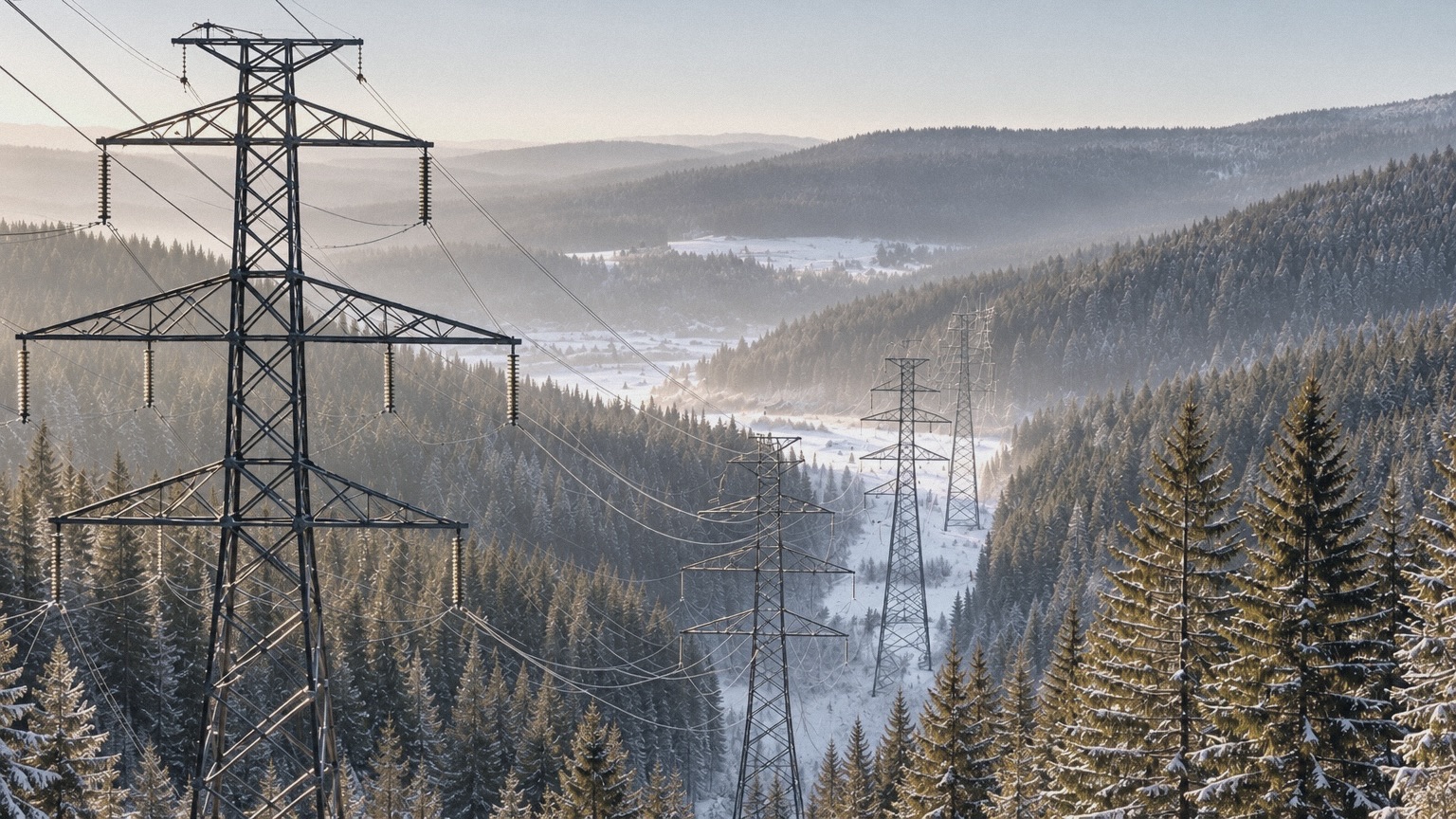
Mining is an energy business first. Where the power comes from, how stable it is and how easily the heat can be removed decide most of what happens on a site. Northern Norway does well on all three.
- ~98%of Norway's electricity comes from hydro or windEEA
- 157.2 TWhproduced in 2024, a national recordEnergifakta Norge
- 87+ TWhof energy stored as water in about 1,100 reservoirsEnergifakta Norge
- +23%at most: production growth in Central and Northern Norway, 2024 to 2025Statistics Norway
Almost all of the power is renewable
According to the European Environment Agency, about 98% of Norway's electricity comes from hydro or wind. The power we buy for our sites is 100% renewable. Hydropower alone accounts for around 88% of normal annual production, from 1,791 hydropower plants, according to Energifakta Norge.
Production is large and growing: Norway generated a record 157.2 TWh in 2024. Around 1,100 reservoirs can store more than 87 TWh of energy as water. That storage is what makes hydro different from wind or solar: the water waits in the reservoir until the power is needed, so production follows demand rather than the weather of the day.
One country, five price areas
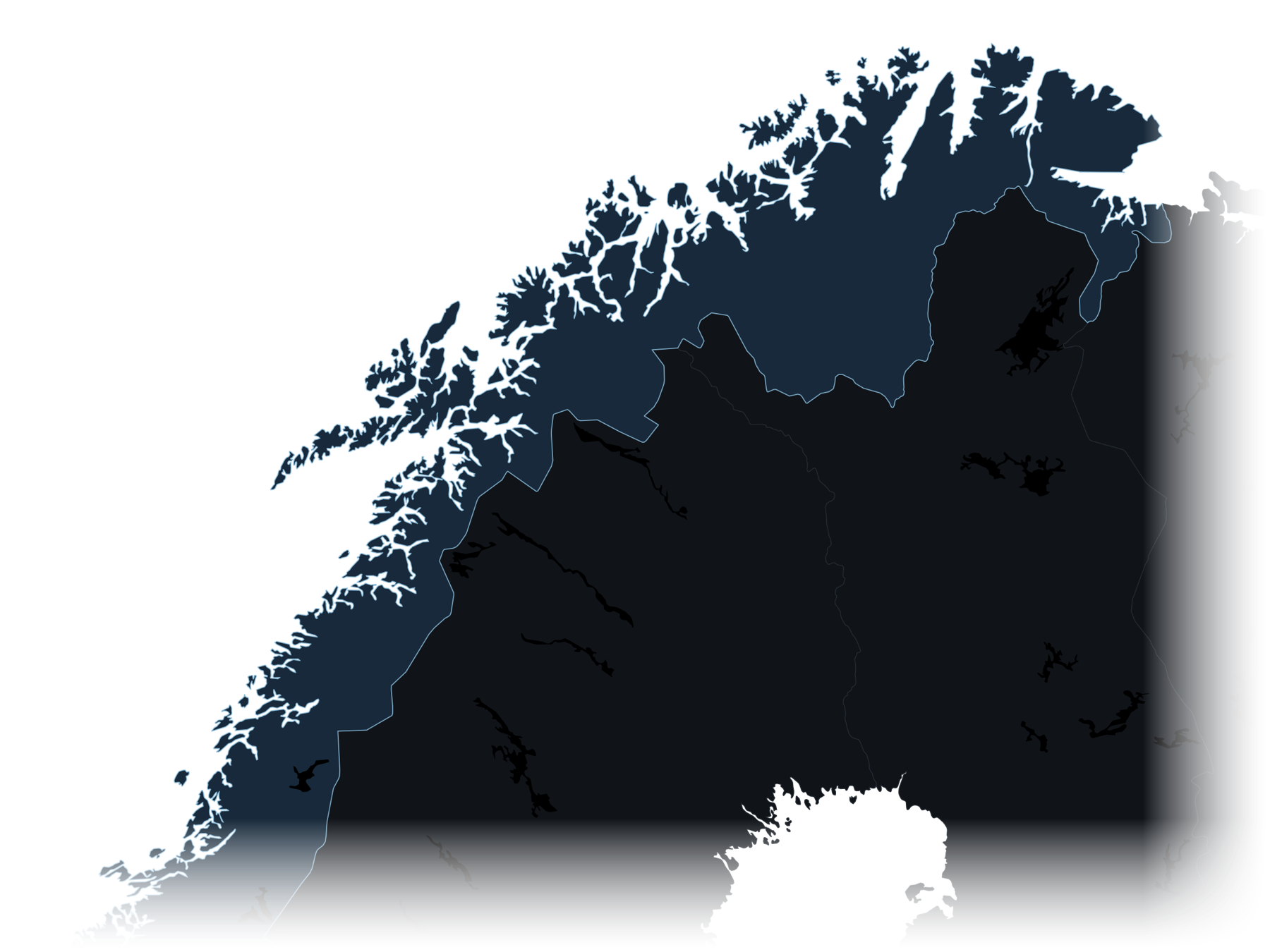
Norway's grid is split into five bidding zones: Eastern (NO1), Southern (NO2), Central (NO3), Northern (NO4) and Western Norway (NO5). Statnett, the grid operator, explains why: power comes largely from weather-dependent sources, and the grid can't always move enough of it between regions to balance supply and demand everywhere.
Northern Norway, NO4, is a region of surplus. In its review of 2025, Statistics Norway reports that reservoir levels in Central and Northern Norway were very high, that production there rose by as much as 23% from 2024 to 2025, and that the capacity to send power south was limited. Much of that power stays in the north.
For a mining site, a surplus region means power that is available, and a grid that isn't stretched by the site's demand.
The climate does part of the cooling
Hydro miners send their heat into a water loop, and a dry cooler releases it into the outside air. Bitmain gives the limits for its own dry cooler: a dry cooler can only cool the water if the outside air is colder than the water, so the warmer the water leaving the machines, the warmer the outside air can be. The colder the air, the less the dry cooler has to work. The water and power side is covered in what hydro miners need from a site.
| If the water leaving the machines is | the outside air can be up to |
|---|---|
| 35 °C | 30 °C |
| 45 °C | 40 °C |
| 50 °C | 45 °C |
Source: Bitmain, S21 XP Hyd specification, with Bitmain's EC2-DT dry cooler.
In the north, the challenge is often the opposite: Bitmain's S21 XP Hyd won't start if the inlet water is below 20 °C, and its specification allows antifreeze in the loop. A northern site has to keep its water warm enough in winter, not cold enough in summer. That's also why the heat from the machines is so useful there (see our article on heat reuse).
A northern site has to keep its water warm enough in winter, not cold enough in summer.
What this means for your machines
- 100% renewable power, from a storage-backed system.
- A region where the grid has power to spare.
- Cooling that works with the climate rather than against it.
All our sites are in price area NO4.
See which of our sites have open slots, or ask us for a written quote.